
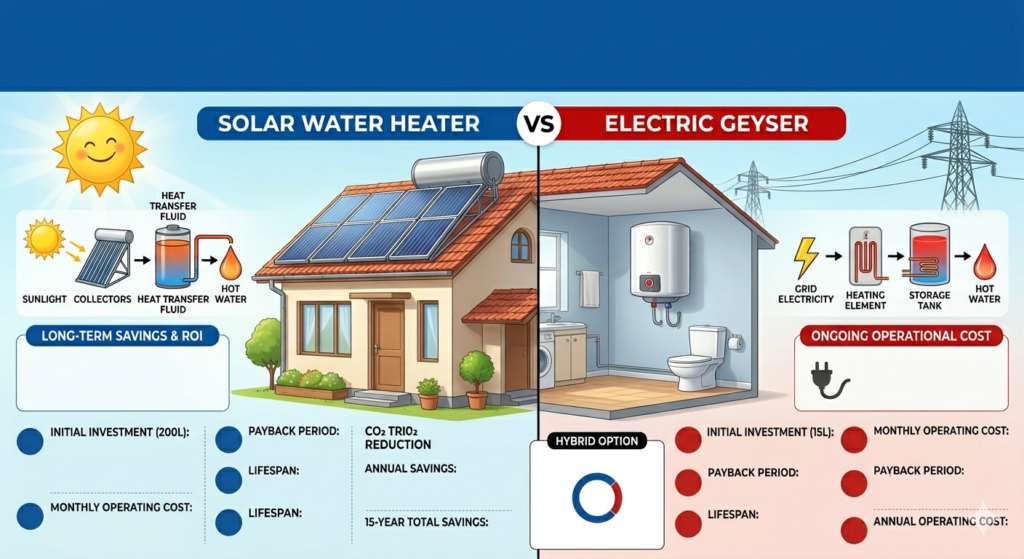
How Much Can You Save with Solar Water Heaters vs Electric Geysers?
With electricity prices steadily increasing and more people becoming conscious about sustainable living, many Indian households are now looking for smarter energy solutions. One such upgrade is replacing a traditional electric geyser with a solar water heater.
But the big question is—how much can you actually save? Let’s simplify the comparison so you can clearly understand the costs, savings, and long-term benefits.
Understanding the Basic Difference
Before we talk about savings, it’s important to know how both systems work.
Electric Geysers
Electric geysers heat water using electricity through built-in heating elements. They are easy to use and commonly found in most homes, but they consume a significant amount of power—especially during winter when usage is higher.
Solar Water Heaters
Solar water heaters use sunlight to heat water through panels installed on your rooftop. The heated water is stored in an insulated tank, so it stays warm for later use.
Since they depend on solar energy, they reduce your reliance on electricity almost completely.
Electricity Consumption: Where the Cost Adds Up
Electric Geysers
A typical electric geyser uses around 2000–3000 watts per hour. If a family uses it daily for 2–3 hours, the electricity consumption adds up quickly.
Over time, this becomes a noticeable part of your monthly electricity bill—especially during colder months.
Solar Water Heaters
Once installed, solar water heaters use free sunlight to do the job. There may be a small amount of electricity used for backup during cloudy days, but overall consumption is minimal compared to a geyser.
Cost Comparison: Short-Term vs Long-Term
Initial Cost
This is why many people choose geysers initially—but that’s only part of the picture.
Long-Term Expenses
Electric geysers keep adding to your electricity bill every month.
Solar water heaters, on the other hand, have almost no running cost. Over time, the money you save on electricity easily covers the installation cost.
In many cases, government subsidies also help reduce the initial expense of solar systems.
So, How Much Can You Actually Save?
Monthly & Yearly Savings
By switching to a solar water heater, households can reduce water heating costs by 70% to 90%.
This means:
Payback Period
Most solar water heaters recover their cost within 2 to 4 years. After that, you’re essentially saving money every year.
Environmental Benefits
Lower Carbon Footprint
Electric geysers depend on electricity, which often comes from fossil fuels. This contributes to pollution.
Solar water heaters use clean, renewable energy—helping reduce environmental impact.
A Step Toward Sustainable Living
Choosing solar isn’t just about saving money. It’s also about making a responsible choice for the environment and future generations.
Performance & Reliability
Consistent Hot Water
Modern solar water heaters are designed to provide hot water throughout the day. With proper installation, they work efficiently in most weather conditions.
Backup Option
Most systems include an electric backup, so you’ll still have hot water on cloudy or rainy days.
Why Solar Water Heaters Work Well in Pune
Cities like Pune receive plenty of sunlight throughout the year, making solar water heaters highly effective.
With rising electricity tariffs in Maharashtra, switching to solar becomes even more practical and cost-saving for homeowners in this region.
Choosing the Right System
Before installing a solar water heater, consider:
Taking expert advice can help you select the right system for your home.
Long-Term Value
Unlike electric geysers that continuously increase your expenses, solar water heaters are a long-term investment.
They:
Conclusion
Switching from an electric geyser to a solar water heater is a smart move—both financially and environmentally. While the initial cost may be higher, the long-term savings and eco-friendly benefits make it completely worth it.
If you’re planning to make the switch, it’s always best to consult experts for the right solution based on your needs.
Savemax Solar Systems Pvt Ltd
Address: Opp. lane of Pooja Electronics, Manaji Nagar, Narhe, Pune, Maharashtra 411041
Phone: +919730015810
Make the shift to solar today and enjoy long-term savings while contributing to a greener future! 🌞
WhatsApp us