
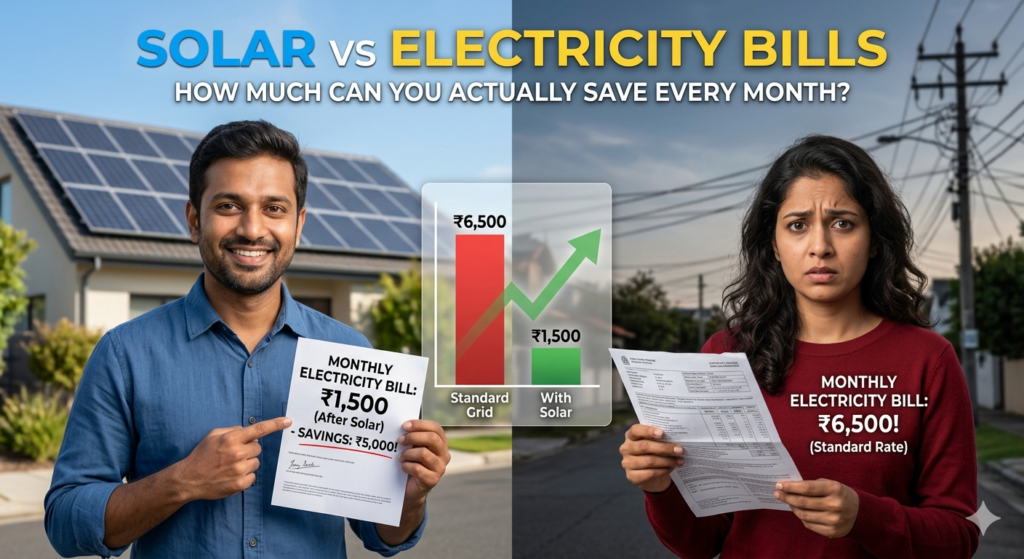
In today’s world, electricity costs are rising steadily. Many homeowners and businesses are actively looking for ways to reduce their monthly expenses. One of the most effective solutions is switching to solar energy. But the common question remains — how much can you actually save every month with solar power?
In this blog, we will explain the difference between traditional electricity bills and solar energy savings. You’ll also understand why solar energy is not just environmentally friendly but also a smart financial investment.
Understanding Your Current Electricity Expenses
Electricity bills in India are increasing due to rising fuel costs, infrastructure development, and growing demand. On average, a household in Pune spends between ₹2,000 to ₹8,000 per month, depending on usage, appliances, and lifestyle.
Appliances such as air conditioners, geysers, washing machines, and refrigerators consume a significant amount of electricity. Over time, these costs add up and can become a burden on your monthly budget.
What Happens When You Switch to Solar?
Solar energy allows you to generate your own electricity using sunlight. Once a solar system is installed, your dependence on the electricity grid reduces significantly.
This means:
A rooftop solar system converts sunlight into electricity that you can use during the day. If your system generates more electricity than needed, the extra energy can be stored or exported back to the grid.
Monthly Savings: A Realistic Breakdown
Let’s understand this with a simple example:
Without Solar Energy:
With Solar Energy:
Estimated Savings:
This shows that a solar system can recover its cost within a few years. After that, you can enjoy nearly free electricity for decades.
Factors That Affect Your Solar Savings
Your actual savings depend on several factors:
Higher electricity usage means greater savings when switching to solar.
A larger solar system generates more electricity, reducing dependence on the grid.
Cities like Pune receive ample sunlight, making solar systems highly efficient.
Government incentives can significantly reduce the installation cost of solar systems.
With net metering, you earn credits for excess electricity generated, further lowering your bills.
Solar vs Traditional Electricity: Long-Term Comparison
Cost Stability
Electricity prices continue to rise, while solar energy offers stable and predictable costs.
Maintenance
Solar systems require minimal maintenance compared to traditional power sources dependent on fuel.
Return on Investment
Most solar systems recover their cost within 3–5 years and last for 20–25 years.
Environmental Impact
Solar energy is clean and renewable, helping reduce your carbon footprint.
Why Solar is a Smart Investment in 2026
With increasing awareness about sustainability and rising electricity costs, solar energy is no longer a luxury — it’s a necessity.
Here’s why more people are switching to solar:
Investing in solar today means preparing for a secure and cost-effective future.
Common Myths About Solar Savings
Myth 1: Solar is too expensive
With government subsidies and financing options, solar systems are more affordable than ever.
Myth 2: Savings are minimal
In reality, monthly savings can be substantial, especially for high electricity users.
Myth 3: Solar doesn’t work in monsoon
Solar panels still generate electricity on cloudy days — just at a slightly reduced efficiency.
How to Maximize Your Savings
To get the best results from your solar system:
A properly installed system will deliver maximum efficiency and long-term savings.
Conclusion
Switching to solar energy is one of the smartest financial decisions you can make today. With the ability to save thousands of rupees every month, solar power not only reduces electricity bills but also ensures long-term energy security.
If you are planning to switch to solar energy, it is important to choose a trusted provider who can guide you through the entire process.
Contact for Reliable Solar Solutions
Savemax Solar Systems Pvt. Ltd.
Address: Opp. Lane of Pooja Electronics, Manaji Nagar, Narhe, Pune, Maharashtra – 411041
Mobile No: +919730015810
☀️ Make the move today and start saving on your electricity bills with solar power!
WhatsApp us