
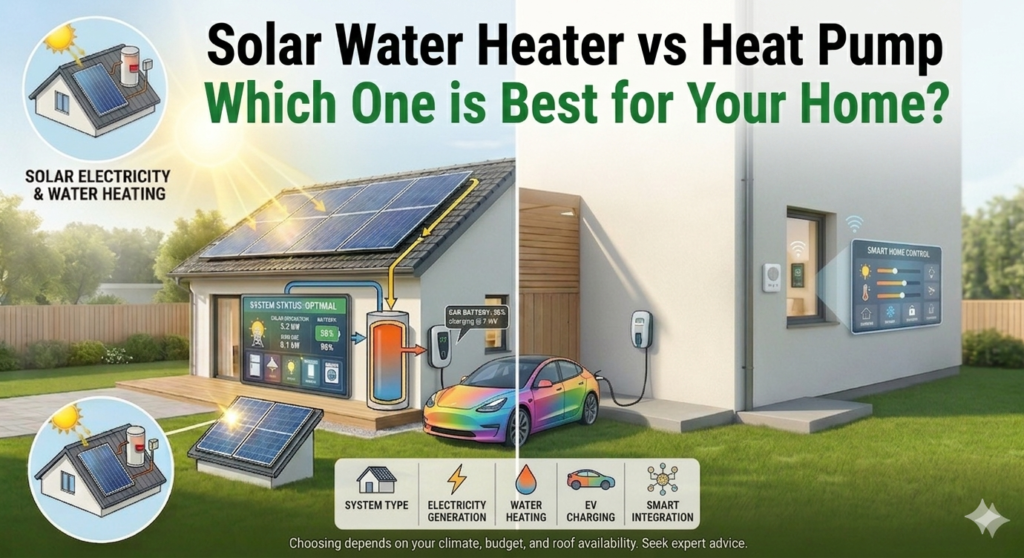
Solar Water Heater vs Heat Pump: Which One is Best for Your Home?
With electricity costs rising and more people focusing on energy-efficient living, choosing the right water heating system has become important. Two popular options today are solar water heaters and heat pumps. Both are better alternatives to traditional electric geysers—but which one actually suits your home?
Let’s simplify the comparison so you can make a smart decision based on cost, performance, and long-term savings.
What is a Solar Water Heater?
How It Works
A solar water heater uses sunlight to heat water through panels (collectors) installed on your rooftop. The heat is then transferred to water stored in an insulated tank, keeping it hot for daily use.
Why It Works Well in India
India gets plenty of sunlight throughout the year, especially cities like Pune. This makes solar water heaters highly efficient and cost-effective. Once installed, they mostly rely on free solar energy—so your electricity usage drops significantly.
What is a Heat Pump?
How It Works
A heat pump uses electricity to absorb heat from the surrounding air and transfer it to water. Instead of producing heat directly, it moves heat—making it more efficient than regular electric heaters.
Where It’s Useful
Heat pumps can work even when there’s no sunlight, such as during rainy or cloudy days. This makes them a reliable option in areas where solar exposure is limited.
Solar Water Heater vs Heat Pump: Key Differences
Energy Source & Efficiency
If you want the lowest running cost, solar clearly has the advantage.
Initial Cost
Solar systems usually recover their cost faster because of lower operating expenses.
Running Cost & Savings
In the long run, solar systems offer higher savings.
Performance in Different Weather
If your area gets less sunlight, heat pumps may feel more reliable.
Maintenance & Lifespan
Solar systems are generally simpler and more durable.
Which One Should You Choose?
Choose Solar Water Heater If:
For cities like Pune, solar water heaters are often the best choice.
Choose Heat Pump If:
Cost vs Long-Term Value
Both options are energy-efficient, but solar water heaters offer better long-term value because they use free energy. Heat pumps still rely on electricity, which means ongoing costs.
If your main goal is to cut down electricity bills significantly, solar is usually the smarter investment.
Environmental Impact
Solar systems are the more eco-friendly option overall.
Conclusion
Both solar water heaters and heat pumps are great upgrades from traditional geysers. The right choice depends on your home setup, budget, and energy goals.
For most Indian homes—especially in sunny areas like Pune—solar water heaters stand out as the most cost-effective and eco-friendly option. They offer long-term savings, low maintenance, and reliable performance.
If you’re planning to switch, it’s always best to consult experts who can guide you based on your exact requirements.
Savemax Solar Systems Pvt Ltd
Address: Opp. lane of Pooja Electronics, Manaji Nagar, Narhe, Pune, Maharashtra 411041
Phone: +919730015810
Make a smart investment today and enjoy long-term savings with a greener, energy-efficient lifestyle! 🌞
WhatsApp us