
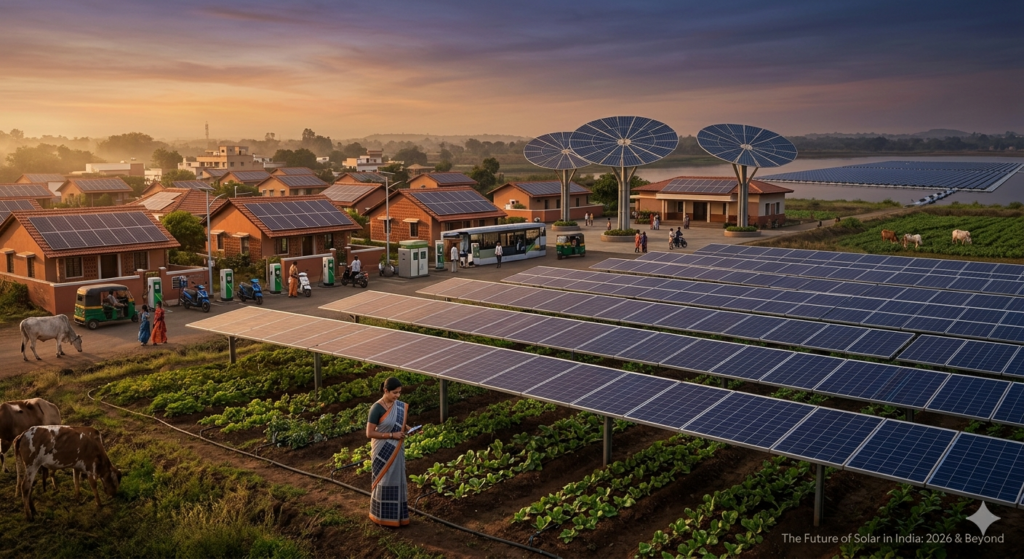
India is stepping into a new chapter of clean energy—and solar power is right at the heart of it. As electricity needs grow and sustainability becomes more than just a buzzword, solar energy is quickly turning into a practical, everyday solution for homes, businesses, and industries across the country.
By 2026 and beyond, solar won’t just be an alternative—it will be a mainstream power source. Smarter technology, better storage options, and strong government support are making solar energy more accessible than ever, both in cities and rural areas.
Where India Stands Today with Solar Energy
Over the last decade, India has emerged as one of the fastest-growing solar markets in the world. Thanks to falling solar panel prices and supportive government schemes, going solar is no longer expensive or complicated.
Across the country, large solar parks are powering industries, while rooftop solar systems are helping families and businesses cut electricity bills. More people are choosing solar not just to save money, but to gain energy independence and contribute to a cleaner environment.
Solar Growth Expectations by 2026
Bigger Utility-Scale Solar Projects
Large solar farms will continue to expand and play a major role in meeting India’s growing power demand. Easier financing, improved infrastructure, and faster approvals are helping projects move from planning to execution much quicker than before.
Rooftop Solar on the Rise
Rooftop solar is becoming a smart choice for homeowners, offices, hospitals, and commercial buildings. Lower electricity bills, net metering benefits, and faster returns on investment are driving adoption—especially in urban and semi-urban areas.
Technology That’s Changing the Solar Game
More Power, Less Space
New-age solar panels like monocrystalline and bifacial modules generate more electricity while using less space. Upcoming technologies such as perovskite solar cells promise even higher efficiency and longer life, making solar systems more powerful and cost-effective.
Battery Storage & Smart Systems
Energy storage is solving one of solar’s biggest challenges—power availability after sunset. Advanced batteries allow users to store excess energy for later use, while smart monitoring systems ensure better performance, safety, and reliability.
Government Support Fueling Solar Growth
Government policies continue to encourage solar adoption through subsidies, net metering, and renewable energy targets. There’s also a strong push toward domestic solar manufacturing, which helps reduce imports and creates local jobs.
Clear long-term goals and stable policies are giving both consumers and investors the confidence to go solar.
Looking Beyond 2026: Solar’s Bigger Role
The future of solar goes beyond just electricity. Solar-powered green hydrogen is expected to transform industries like steel, cement, and transportation. Meanwhile, decentralized solar systems are already changing lives in rural India—powering irrigation, schools, clinics, and small businesses.
As solar becomes more affordable and battery technology improves, it will play a key role in India’s energy security and climate commitments.
Challenges Worth Solving
Like any growing sector, solar energy faces challenges—grid upgrades, land availability, and financing for small developers. But with innovation, partnerships, and skilled manpower, these challenges also bring huge opportunities for growth.
A Solar-Powered Future Is Within Reach
The future of solar in India is bright and full of promise. By 2026 and beyond, solar energy will be a major pillar of India’s power system—supporting economic growth while protecting the planet.
If you’re thinking about switching to clean, reliable, and cost-effective energy, there’s no better time than now.
Savemax Solar Systems Pvt Ltd
Address– Opp. lane of Pooja Electronics, Manaji Nagar, Narhe, Pune – 411041
Phone– +919730015810
WhatsApp us