
Switching to solar energy is one of the smartest decisions a homeowner can make today. With rising electricity bills, occasional power cuts, and growing awareness about clean energy in India, residential solar systems are becoming more common than ever.
However, choosing the right solar panel is not just about cost. It’s about selecting a system that suits your home, meets your energy needs, and delivers reliable savings for years to come. This guide will help you understand what really matters when choosing solar panels for your home.
Why Choosing the Right Solar Panel Matters
Solar panels are a long-term investment, usually lasting 25 years or more. A well-chosen system can significantly reduce your electricity bills, increase your property value, and protect you from rising energy costs.
On the other hand, selecting the wrong panel may result in lower efficiency, poor performance in hot weather, and reduced long-term savings. Making the right choice at the beginning ensures peace of mind and better returns over time.
Types of Solar Panels Commonly Used in Homes
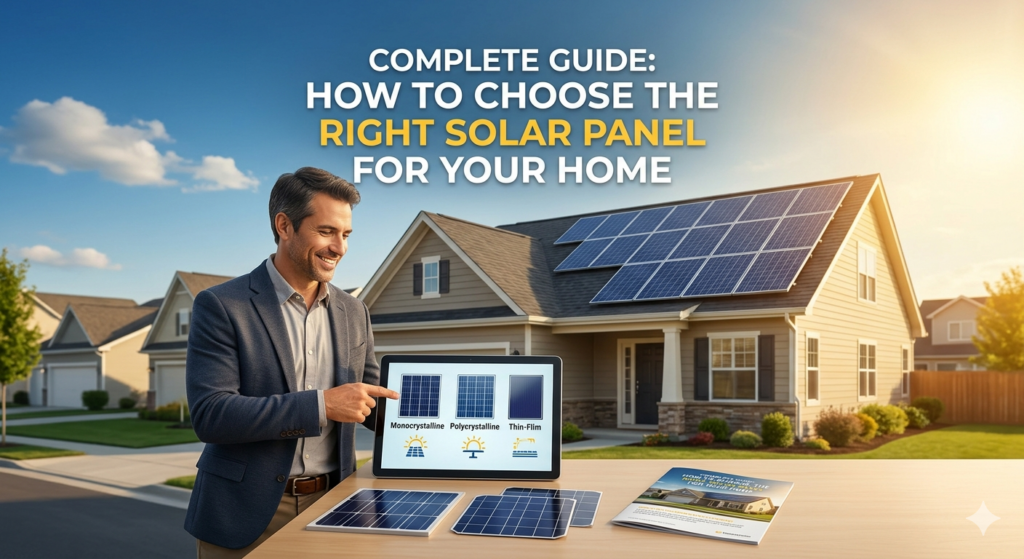
Monocrystalline Solar Panels
Monocrystalline panels are known for their high efficiency and modern appearance. They generate more electricity using less space, making them ideal for homes with limited rooftop area.
Although they cost slightly more, they perform better in most conditions and are a popular choice for urban homes.
Polycrystalline Solar Panels
Polycrystalline panels are more affordable and offer dependable performance. They require slightly more roof space to generate the same power as monocrystalline panels.
These panels are a good option if you have enough rooftop space and want a budget-friendly solution without compromising reliability.
Advanced Solar Panels (PERC & Bifacial)
Advanced panels such as PERC and bifacial technology are designed to improve power generation. Bifacial panels can capture sunlight from both sides, increasing overall output.
These panels are often used in premium or high-performance systems and are gradually becoming popular for residential use.
Important Factors to Consider Before Installation
Solar Panel Efficiency
Efficiency determines how much electricity a panel can produce from available sunlight. Higher efficiency panels are especially useful for homes with limited roof space.
In Indian weather conditions, good efficiency ensures consistent performance throughout the year.
Power Capacity and System Size
Solar panels are rated in watts, and the total system size should match your electricity usage.
For example:
Proper sizing helps you avoid overspending and ensures maximum savings.
Roof Direction and Condition
South-facing roofs receive the most sunlight in India. Your rooftop should be strong, well-angled, and free from shadows caused by trees, buildings, or water tanks.
Even small shading can affect the overall performance of your solar system.
Performance in High Temperatures
Solar panels lose some efficiency as temperatures rise. Choosing panels with a low temperature coefficient helps maintain better performance during hot Indian summers.
Warranty and Quality Standards
Always choose solar panels that come with:
Certified panels from trusted manufacturers offer better durability and long-term reliability.
On-Grid vs Off-Grid Solar Systems
On-Grid Solar System
An on-grid system is connected to the electricity grid. You use solar power during the day and grid power when needed. Excess electricity is sent back to the grid through net metering, reducing your monthly bills.
This is the most common choice for urban homes.
Off-Grid Solar System
Off-grid systems include batteries and operate independently from the grid. They are ideal for areas with frequent power cuts or unreliable electricity supply.
While the initial cost is higher, they provide complete energy independence.
Role of Inverters and Battery Storage
Solar panels generate DC electricity, which is converted into usable AC electricity through a solar inverter. A high-quality inverter ensures smooth performance and efficient energy use.
Battery storage allows you to store excess solar energy and use it at night or during power outages. Lithium-ion batteries are the preferred choice today due to their efficiency and low maintenance.
Government Subsidies and Savings
The Indian government offers subsidies for residential rooftop solar installations, reducing the overall cost of the system. Net metering policies further increase savings by allowing homeowners to export unused electricity to the grid.
These benefits make solar energy a practical and affordable investment.
Return on Investment and Long-Term Benefits
Most residential solar systems recover their cost within 4 to 6 years. After that, the electricity generated is nearly free for the remaining lifespan of the system.
With electricity prices rising every year, solar ensures stable and predictable energy costs for decades.
Final Thoughts
Choosing the right solar panel for your home is about finding the right balance between efficiency, durability, budget, and energy needs. When selected carefully, solar panels offer long-term savings, energy security, and a cleaner future.
Solar energy is no longer a luxury—it is a reliable and sustainable solution for modern homes. Making the right decision today means enjoying lower electricity bills and energy independence for the next 25 years and beyond.
Savemax Solar Systems Pvt Ltd
Address– Opp. lane of Pooja Electronics, Manaji Nagar, Narhe, Pune – 411041
Phone– +919730015810
WhatsApp us